
Public Profile Search Timeline: From First Clue to Confident Match
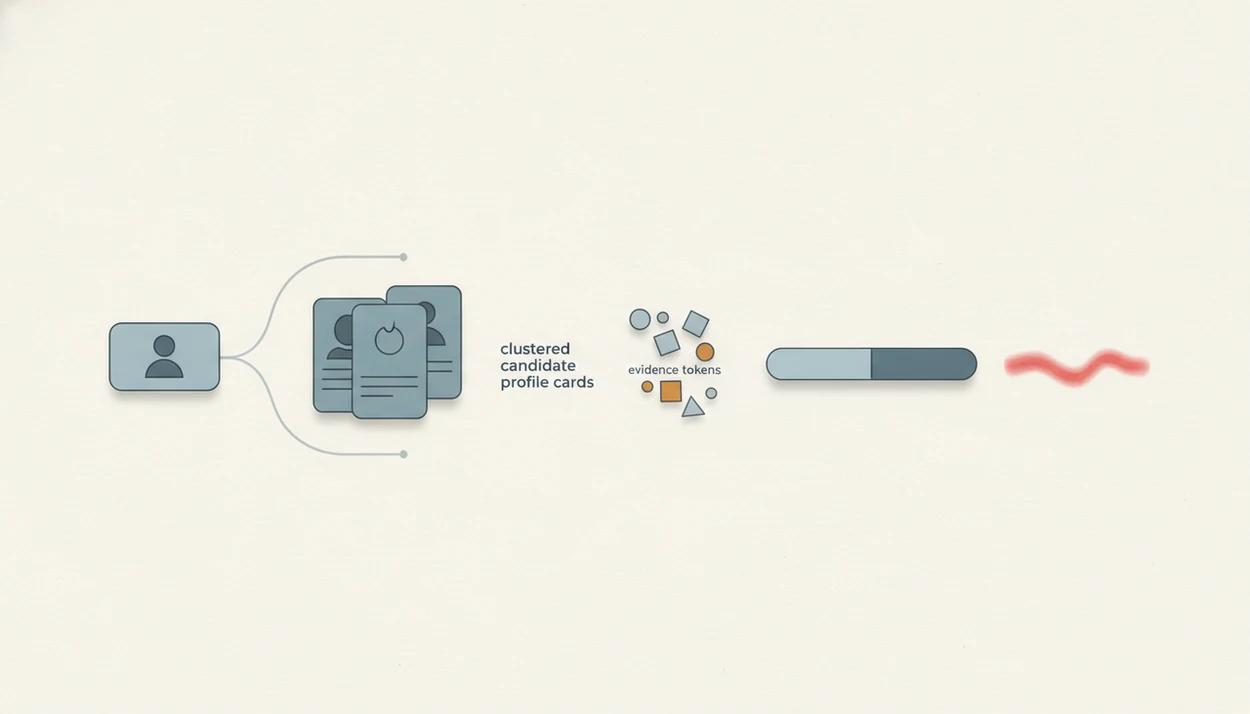
A public profile search timeline is a staged process for moving from one clue, such as a name, username, or photo, to a confidence-rated match using only appropriate public signals. The safest workflow gathers clues first, checks multiple sources, verifies identity signals, scores confidence, and stops before over-collecting or inferring sensitive details.
Definition: A public profile search timeline is a structured people search workflow that organizes public search steps into clue gathering, profile discovery, cross-checking, verification, confidence scoring, and stop rules.
TL;DR
- Start with the smallest useful clue set: name, username, photo context, location, employer, or known platform.
- Verify with multiple independent signals instead of trusting a single name match, avatar, or AI suggestion.
- Use stop rules for time, confidence, sensitive data, and uncertainty so the search stays ethical and proportionate.
Public Profile Search Timeline Definition and Safe Use Case
A public profile search timeline is a structured sequence for checking publicly visible information, narrowing candidate profiles, and deciding whether the evidence is strong enough for the stated purpose.
Public profile search is not private investigation, background screening, or doxxing. It uses public clues, explains the limitation first, and avoids private-account access, sensitive inference, or pressure on third parties. A conference badge photo in image results may help confirm a work profile, but it should not become permission to collect home addresses or family details.
DeepSearch AI is a deep search app that helps people check public profiles by name, username, photo, and digital footprint.
The goal is confidence, not absolute certainty. Good AI deep search guides for finding people online by name, username, photo, and public digital footprint with clear ethics and limitations deliver organized public clues, not guaranteed identity matches or permission to intrude.
Five Public Search Steps Readers Must Know First
The five core public search steps are clue inventory, broad discovery, candidate clustering, corroboration, and confidence scoring. Each step should either increase confidence with public evidence or trigger a stop rule.
- A staged workflow starts broad, then becomes more specific only when the first clue set is too ambiguous.
- Disambiguation checks should happen at every stage, especially with common names and reused usernames.
- Stop rules prevent over-collection, privacy harm, and the quiet slide from verification into surveillance.
- Multiple independent signals are stronger than one matching clue, even when that clue looks convincing.
- AI tools can speed candidate matching, but human review is still required before you conclude.
Keep the original profile URL open in a browser tab before a username changes. That small habit protects the chain of evidence and makes later review less sloppy.
For a name-only search, a deep search by name process is often easier than starting with images because names can be paired with city, employer, school, and platform clues.
Before You Start a Public Profile Search Timeline
Before you start a public profile search timeline, decide whether the search is appropriate, limited, and useful for a non-FCRA purpose. A few minutes of setup can prevent a messy tab spiral, a false match, or unnecessary collection.
- Define the purpose in plain language before opening tools or search tabs. Keep it outside employment, credit, tenant, insurance, eligibility, or similar screening decisions.
- List the minimum public clues that make the search responsible: name, username, platform, city, employer, school, photo context, or another non-sensitive starting point.
- Set stop rules in advance for time, sensitivity, and confidence. For example, stop after 20 minutes, stop if private contact details become the next step, or stop if two candidates remain equally plausible.
- Confirm that you will not bypass private accounts, scrape around platform limits, pressure mutual contacts, or use hidden access to see restricted content.
- Decide how notes will be handled. Save only what supports the stated purpose, mark uncertain matches clearly, redact unnecessary personal details in screenshots, and document “not enough evidence” when confidence stays low.
Public Profile Search Data Flow From First Clue to Verified Match
How a public profile search timeline works: one clue creates candidate profiles, candidate profiles create comparison points, and comparison points raise or lower confidence over time. Search systems rely on entity resolution, which means deciding whether separate public records or profiles refer to the same person.
The data flow usually moves from name, username, or photo context into open-web results, platform pages, and public cross-links. Useful disambiguation signals include age range, location, mutual links, usernames, bios, work history, and profile-to-profile links.
Scale creates both opportunity and risk. LinkedIn reported over 930 million members worldwide as of 2023, which shows how much professional profile data may be public or semi-public source. Older profiles, stale job titles, deleted pages, and platform-restricted data can distort confidence. The gray “No results found” page may mean no public match. Or a bad query. Both happen.
People Search Workflow Steps for Names, Usernames, and Photos
How to use a public profile search timeline:
- Collect the smallest useful clue set: exact name, username, platform, location, employer, or photo context.
- Run broad public queries before narrowing, including quoted names, username variants, and platform-specific searches.
- Group candidate profiles by likely person, not by search result order or visual similarity alone.
- Cross-check identity signals such as bios, work history, cross-linked accounts, profile age, and repeated public context.
- Assign a confidence level: low, medium, high, or verified enough for your stated non-FCRA purpose.
- Stop when the match is uncertain, the search becomes disproportionate, or sensitive attributes would be needed.
Tools such as DeepSearch AI, Google, Bing, LinkedIn search, and platform-native search can help organize public clues, but they should not replace manual review. Redact phone numbers and street addresses before saving a verification screenshot.
Public Profile Search Timeline Stages From Clue to Match
A practical timeline follows an approximate order, not a guaranteed time clock. Some searches end in ten minutes; others should stop because the evidence stays thin.
| Stage | What happens | Decision point |
|---|---|---|
| 1. Clue inventory | List known public clues | Is the starting clue specific enough? |
| 2. Open-web and platform search | Search engines and likely platforms | Are there candidate profiles? |
| 3. Candidate clustering | Group likely matches | Are profiles being mixed? |
| 4. Corroboration | Compare bios, links, photos, history | Do independent signals agree? |
| 5. Confidence scoring | Rate the match | Is confidence enough for the purpose? |
| 6. Stop, discard, or revisit | End or document uncertainty | Would more searching create risk? |
Stage 1: Clue inventory
Start with what you already know.
Stage 2: Candidate discovery
A timestamp beside a decade-old post can separate two similar usernames.
Stage 3: Match confidence decision
Document uncertainty instead of smoothing it over.
Profile Verification Timeline Signals That Raise Confidence
Strong, medium, weak, and risky signals should not be treated the same. More data is not always better; low-quality additions can make a false match look stronger.
Strong signals: Cross-linked usernames, consistent work history, matching profile links, similar public bios, and long-standing accounts carry more weight. Comparing two public profile bios side by side on a laptop screen often reveals whether the language is genuinely shared.
Medium signals: Location, school, mutual communities, and repeated avatar style can help, but they need backup.
Weak signals: Common names, copied photos, vague bios, and single-platform matches should not drive the decision. A stock-photo smile in a dating profile is an identity clue, not proof.
Risky signals: Inferred health, politics, sexuality, family details, and private contact information should be excluded. For platform-specific handles, username search social media checks work better when they stay tied to public context.
Confidence Scoring and Stop Rules for Public Search Steps
Confidence scoring gives the search a brake pedal. Pew Research Center reported that 62% of U.S. adults said it is not possible to go through daily life without companies collecting data about them, which is a useful reminder to keep public search narrow and proportionate source.
| Confidence level | Meaning | Next step |
|---|---|---|
| Low | One weak or common clue matches | Pause or gather safer public context |
| Medium | Several signals align, but gaps remain | Cross-check before acting |
| High | Independent public signals point to one person | Use only for the stated purpose |
| Verified enough | Confidence fits the risk tier | Stop and document limits |
Casual curiosity needs less depth than safety-critical due diligence, and some uses may require professional or legal guidance. Stop after a set time, avoid sensitive data, do not harass, do not escalate uncertain matches, and never bypass private-source limits.
A written reminder not to confront publicly belongs beside the notes.
Common Public Profile Search Timeline Mistakes
A common mistake is treating one search engine result as a complete timeline. Search results are snapshots, not a source of truth.
Another mistake is assuming public visibility makes aggregation ethical. Public comments, old bios, and cached snippets can still create privacy harm when combined carelessly. McKinsey reported in 2022 that 40% of consumers said they would switch brands because of poor data-protection practices, which shows how seriously people treat data use source.
AI confidence scores can also be over-read. If you are wondering does AI people search work, the safer answer is that it can suggest candidates, not certify identity. Watch for merged identities, stale usernames, copied bios, and low-quality data that makes a weak match look tidy.
Limitations
A public profile search timeline is useful, but it has hard limits.
- A timeline can never guarantee 100% identity accuracy.
- Common names and sparse digital footprints increase false positives.
- Public-data workflows miss non-indexed, private, deleted, or platform-restricted information.
- AI-assisted search can reflect bias, stale sources, and over-represented platforms.
- Sensitive attributes should not be inferred from public signals.
- Legal rules, privacy laws, and platform terms can change.
- Some searches should stop with no match rather than force a conclusion.
- Public profiles can be impersonated, abandoned, renamed, or copied.
- A marketplace profile with a cracked phone screen over listing photos may still need platform-level verification.
Deep Search AI and similar tools should be used for non-FCRA public profile review, not employment, credit, tenant, insurance, or eligibility decisions. For employment, credit, tenant, insurance, or eligibility decisions, review the Fair Credit Reporting Act rules and use a compliant consumer-reporting process instead of a public-profile workflow source.
FAQ
What is a public profile search timeline?
A public profile search timeline is a staged workflow for finding, comparing, and verifying public profiles. It moves from first clue to confidence decision using only appropriate public information.
How long should profile verification take?
Timing depends on clue quality, risk level, and whether enough independent signals exist. A search should stop if confidence does not improve without disproportionate digging.
What should I check first in a public profile search?
Start with known clues such as exact name, username, platform, location, employer, or photo context. Avoid collecting sensitive attributes as starting points.
How many signals confirm a profile match?
No fixed number guarantees identity. Multiple independent signals are safer than one matching name, avatar, or AI suggestion.
Can AI verify public profiles automatically?
AI can suggest candidate profiles and confidence scores. Human review is still required before treating a profile as a likely match.
When should I stop searching for a public profile?
Stop when the match remains uncertain, the search hits a time limit, sensitive data would be needed, or the purpose no longer justifies the depth. Document uncertainty instead of guessing.
Is public profile searching ethical?
Public profile searching can be ethical when it is limited to appropriate public data, proportionate purpose, and no harassment. It becomes risky when it infers sensitive traits or exposes private contact details.
What causes false public profile matches?
False matches often come from common names, reused avatars, stale usernames, copied bios, and weak single-source evidence. Platform restrictions and outdated search results can also mislead reviewers.